Six ways Candida can make you toxic
In previous articles, we’ve talked about how Candida overgrowth can cause a host of unpleasant symptoms, not only in the digestive system but elsewhere in the body.
I outlined that Candida only overgrows in an unhealthy body, and that in order to truly overcome Candida, it’s important to address the underlying causes.
Candida can be confusing because it causes different symptoms in different people, and this is due to individual genetics, and individual immune systems reacting to Candida in different ways.
Person “A” could have completely different symptoms from person “B” because of all these different interactions.
From the same overgrowth, person “A” could have skin boils, heartburn, bloating, gas and constipation, whereas person “B” could have headaches, brain fog and arthritis.
Candida and toxins
In this article I want to focus on different ways Candida can cause toxicity – literally poisoning you from the inside – and why it is important to make sure you bring it under control.
Candida is very toxic to some people, yet another reason why it may trigger different symptoms on an individual basis.
By bringing Candida under control you can:
- Improve your energy
- Improve your mood and self-confidence
- Banish brain fog and improve your focus and memory
- Sleep better
- Enjoy brighter skin and eyes
- Overcome sinus and lung problems
- Improve immune function
- Reduce or eliminate headaches, muscle and joint pain
- Halt urinary tract problems
Let’s have a look at how and why this is so.
Six ways Candida can make you toxic
Candida can cause toxicity via a number of different pathways, which affect people in different ways, and to differing degrees.
The toxins can subtly influence your energy level, nerve and hormone function, thereby leading to confusing body-wide symptoms.
Here are the main ways Candida can be toxic:
1. Invasion of your Intestinal Lining (leaky gut)
Candida and other fungal critters can exist in different forms, as shown in the first diagram.
It can hang about as individual yeast cells, but it has the ability to grow little roots or tentacles called hyphae (see the picture on on the right, below).
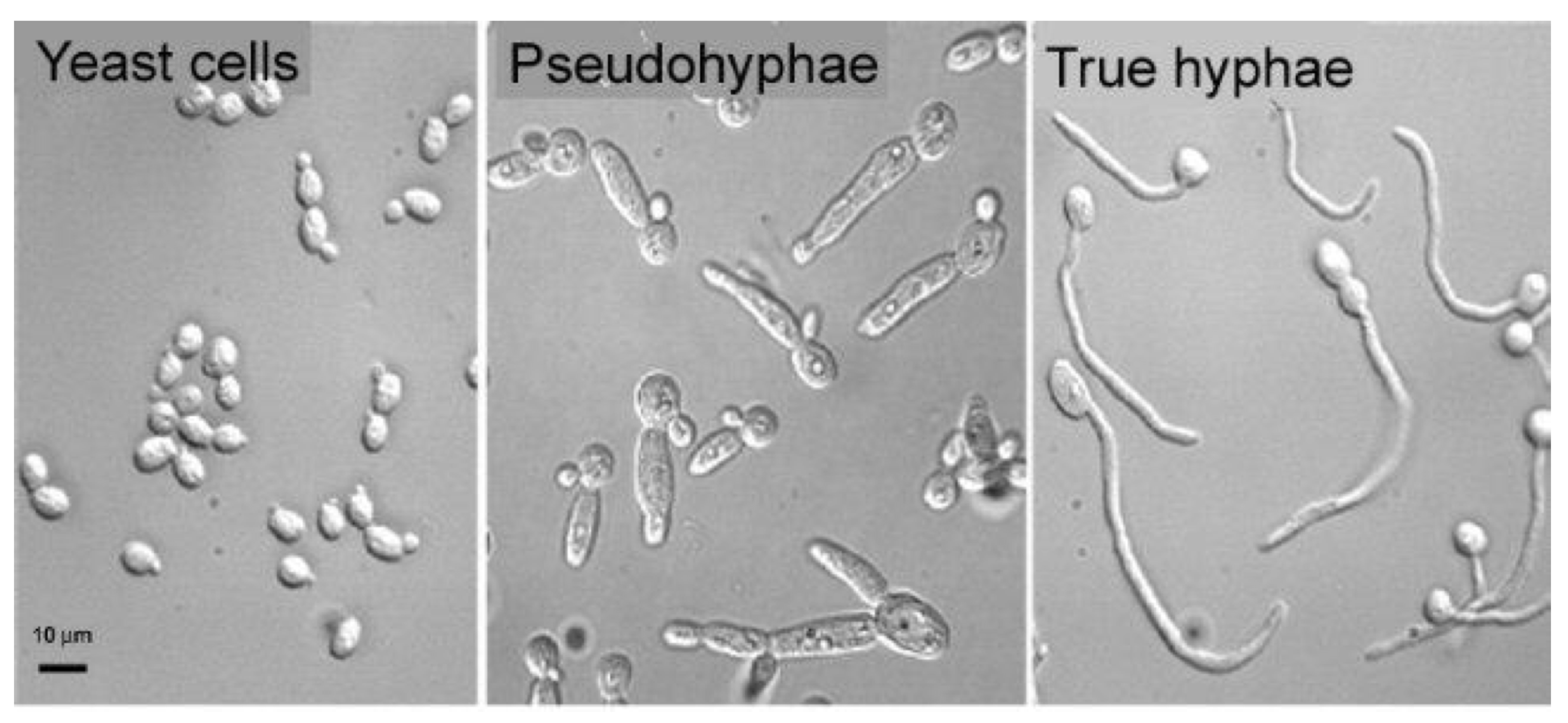
Once it grows these little tentacles, Candida can become quite aggressive.
It digs roots into the intestinal lining, potentially causing your immune system to mount an inflammatory reaction.

This image shows Candida penetrating the intestinal lining.
The resulting immune reaction leads to inflammation, which in turn can cause any of the common digestive symptoms that people struggle with.
Over time, the resulting damage can lead to what we call “leaky gut”.
A leaky gut is not ideal as it enables molecules that shouldn’t break through the intestinal lining to enter the blood stream.
Toxins, undigested food, bacteria and other antigens can enter the bloodstream.
When this happens, the result can be fatigue, mood problems, headaches/migraines, muscle and joint pain, and skin problems.
… all because you have yeast overgrowth in your gut.
Candida is not the only critter that can cause a leaky gut – bacteria, parasites, etc. can also do this.
Food intolerances can also trigger a leaky gut, as can certain nutrient deficiencies, over-exercising and emotional stress.
2. Arabinose toxicity
Arabinose is a type of yeast sugar that is not made by human cells.
We see high levels of this sugar in urine samples of individuals with Candida overgrowth.
Arabinose can block the function of certain vitamins and proteins.
Very high levels of urine arabinose are associated with extreme symptoms and conditions relating to mood and behavior (e.g. schizophrenia and autism).
Arabinose can also form a compound called pentosidine, which may affect metabolism in several ways.
Some authors suggest that pentosidine may trigger autoimmunity, inflammation, and may be a risk for developing amyloid plaque, which is found in Alzheimer’s disease.
Tartaric acid toxicity
Sometimes, we see elevated tartaric acid in urine, along with arabinose, as in the test result, below.
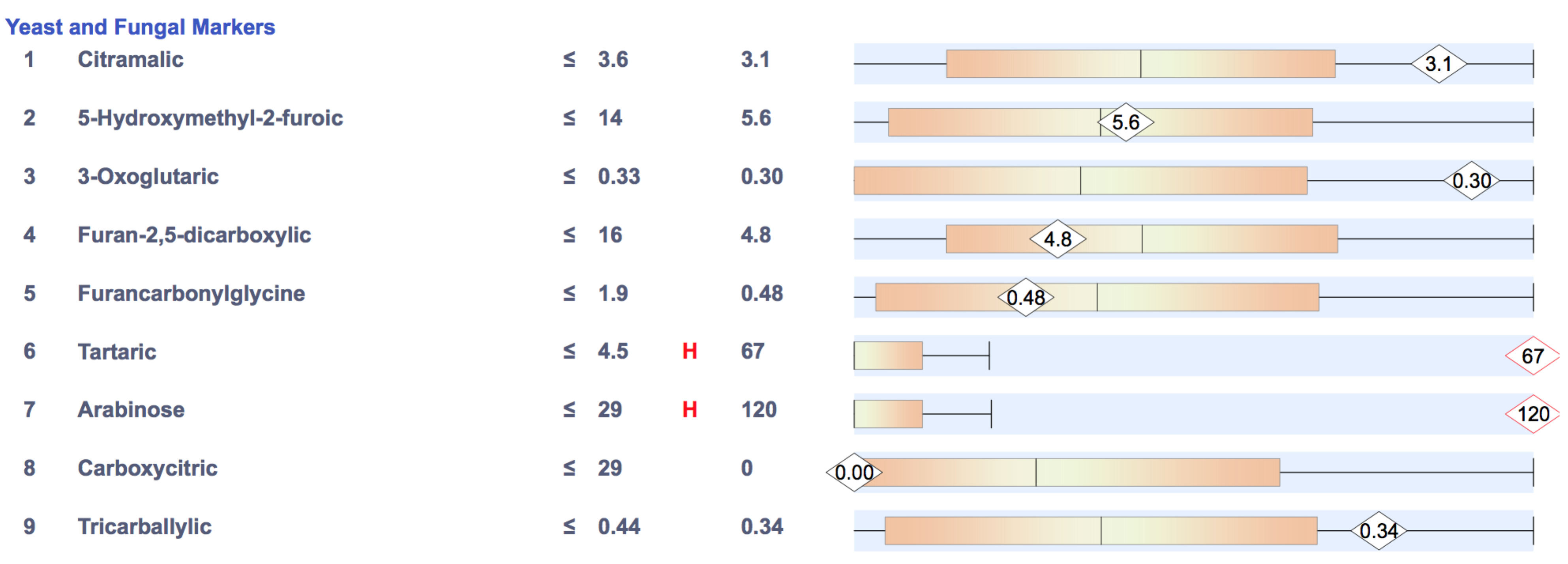
You can see elevated tartatic acid and arabinose levels in this organic acids test result.
When tartaric acid is high, we often see symptoms such as fatigue, depression, joint pain and fibromyalgia.
It causes these symptoms by interfering with the way your cells make energy.
Mitochondria are energy centres in your cells, a bit like like engines in a car
Specifically, tartaric acid blocks a mitochondrial enzyme called fumarase, disrupting energy production and potentially causing fatigue and/or chronic muscle pain.
Dietary assessment is also important because tartaric acid can be consumed in poultry, grape and grape products, certain fruit flavourings, baking powder and cream of tartar.
Gliotoxin
Gliotoxin is a nasty piece of work.
Yeast, fungi and mold species produce this substance when they overgrow in your intestine (or other areas of the body).
Gliotoxin can damage white blood cells, which may deplete immune function.
It also suppresses the production of a vital immune molecule called secretory IgA, which guards your digestive lining against invasion.
When secretory IgA is low, you can’t fight off infections in your digestive tract, urinary tract, sinuses and lungs (IgA is tested in a stool test, by the way).
Low secretory IgA is often found in our clients’ stool tests; it is rare to see normal or optimal IgA levels in people with chronic digestive symptoms).
Finally, gliotoxin can generate oxidative stress, which uses up antioxidants, including vitamin C and glutathione.
Low antioxidant levels are associated with poor health and accelerated aging.
Acetyl aldehyde toxicity
As you probably know, yeast is used in alcoholic beverage production because it ferments glucose (sugar) into acetyl aldehyde and finally into alcohol.
Yeast overgrowth in your intestine can also cause this reaction.
Believe it or not, people have been arrested for drink driving because of yeast overgrowth in the gut causing positive Breathalyzer tests!
Increased acetyl aldehyde also interferes with vitamin B6.
If B6 metabolism is altered, it can affect your detoxification, brain chemistry, hormone production, potentially leading to many weird and wonderful symptoms.
These symptoms might include menstrual problems, confusion, depression/anxiety, fatigue, anemia and dry skin (including dermatitis).
Finally, acetyl aldehyde detoxification uses up nutrients such as vitamin B2, iron and molybdenum, and may lead to subtle deficiencies in these nutrients.
Biofilms
“Biofilm” is a fancy term used to describe a kind of “cocoon”, or “house”, that microorganisms build around themselves for protection.
Microbes talk to each other using chemical signals, enabling them to club together and build these little cocoon structures.
The structures grow, and eventually lots of new free-swimming microbes break free, at which point the process begins again.
Dental plaque is a good example of a biofilm – a hard substance that takes effort to scrape away. Imagine this in your intestine, or lungs!
The diagram explains biofilm formation better than I can in words.
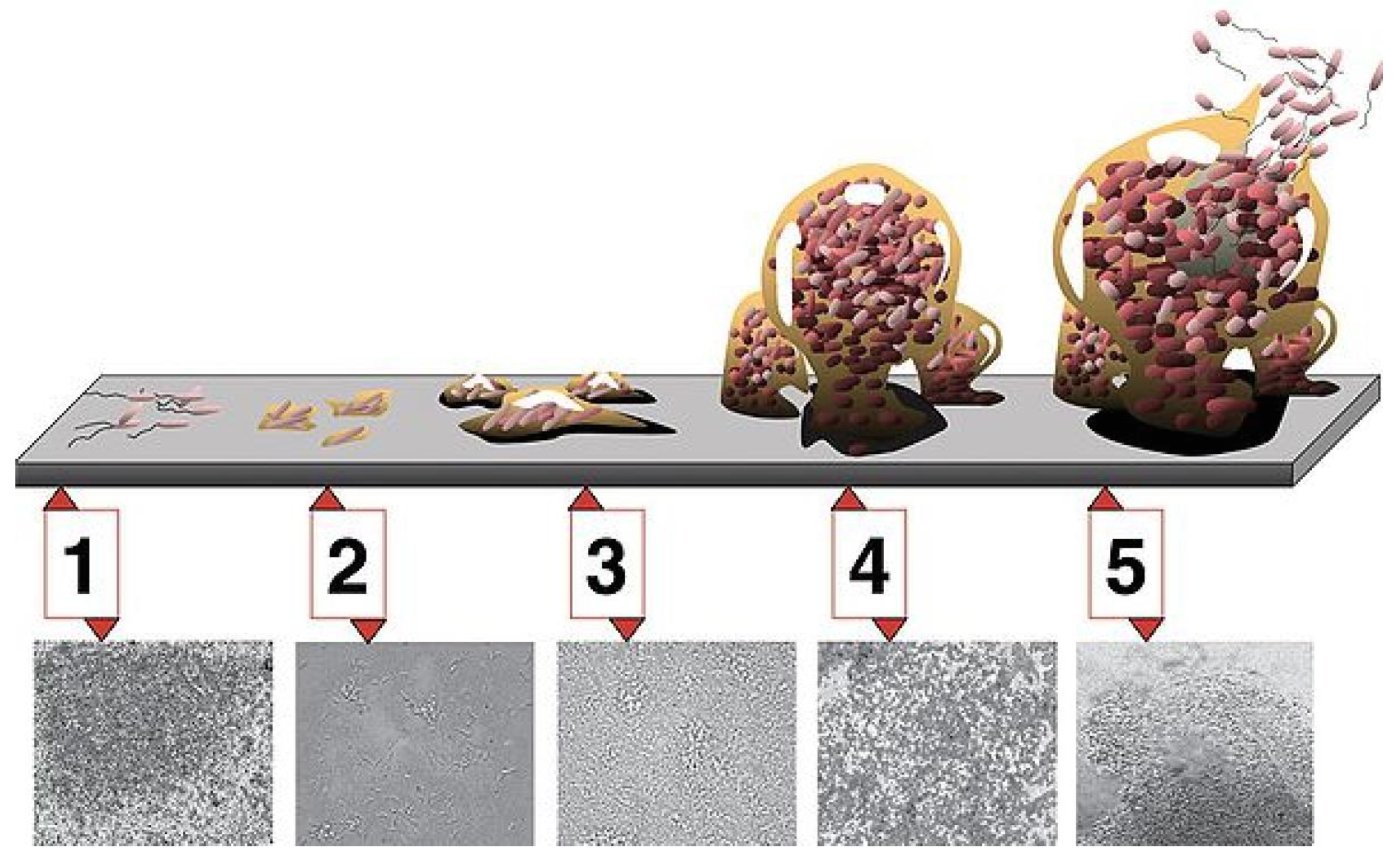
In stage 1, you have a bunch of free swimming microbes. In stages 2-4, they club together and build biofilms. In stage 5, individual organisms emerge from the biofilm. It’s a repeating, vicious cycle.
Different types of microbes can club together share biofilms – it is common to find several different types hiding in them.
Candida, bacteria and parasites can all “hide under the same roof”, so to speak.
It is important to realize that Candida definitely forms biofilms. This is not myth or guesswork – we know it happens.
H. pylori can also form biofilms, and so can many other bacteria. Parasites such as Giardia are also found hiding in biofilms.
It’s no laughing matter because biofilms are impervious to antibiotics, antifungal meds, and herbs that would otherwise kill unwanted microbes.
Why does Candida build biofilm?
Candida will transform from free-swimming yeasts into a biofilm when conditions threaten its existence.
It’s no different from a human being or animal seeking shelter when threatened.
Biofilms are thought to be one of the main reasons for antibiotic and antifungal resistance. Medications cannot penetrate the biofilm.
During treatment, free-swimming microbes are killed, and people’s symptoms can improve initially.
But because the biofilm is not dealt with, weeks or sometimes months later, all the symptoms come back because the microbes break free from the biofilm and invade again.
This is a BIG deal!
In fact, in a published paper by Bjarnaholt, et al, we find this statement:
“In cases where the bacteria succeed in forming a biofilm within the human host, the infection often turns out to be untreatable and will develop into a chronic state.”
In cases such as these, we need to use specific substances to break the biofilms down before medications and herbs can have any chance of being effective.
We’ll discuss this in a subsequent article.
Unfortunately, to my knowledge we can’t test for biofilms.
However careful investigation of a patient’s health history, successes or failures of previous treatments, and comprehensive digestive testing can provide very useful information.
Candida toxicity quick summary
Intestinal Candida overgrowth can cause a wide range of body wide symptoms via several mechanisms:
- Invasion of the intestinal lining by Candida – causes “leaky gut”
- Arabinose interferes with vitamin and animo acid metabolism – may affect behavior and cause plaque build up
- Tartaric acid – interferes with energy production
- Gliotoxin – suppresses immune system and opens you up to other chronic infections
- Acetyl aldehyde – may increase alcohol levels in your body; interferes with vitamin B6 metabolism, affecting hormones, brain chemistry and detoxification
- Biofilms – make it hard to eradicate infections and perpetuate infections
The end result of these mechanisms is a patchwork of symptoms that can become very confusing and difficult to treat.
In addition to digestive problems, these symptoms commonly include:
- Fatigue
- Brain fog
- Depression or anxiety
- Behavioural symptoms (including the autism spectrum)
- Lack of motivation / lethargy
- Headaches
- Skin disorders, including pimples boils and dermatitis
- Joint and muscle pain
What can you do?
Nobody has to live with Candida overgrowth, or any other yeast/fungal overgrowth for that matter.
Identifying the problem is the first step to recovery, which involves some lab testing.
Docs probably won’t want to run testing for Candida, as despite scientific and clinical evidence to the contrary, the medical system doesn’t acknowledge intestinal Candida as a problem.
Of course, it’s important to remember that similar symptoms can result from H. pylori infections, parasites or even something as simple as gluten sensitivity or low stomach acid.
My advice is to pinpoint the exact reasons for your symptoms so that you’re able to take precise, laser-focused action steps to heal your body.
Unless you know what is going in on in your digestive tract, you could easily waste a lot of time and money on the wrong approach.
In the next article, we’ll look at some of the things you can do to get rid of Candida and its cousins, including diet, medications and supplements.
For now, if you’re keen to get rid of bloat, discomfort, low energy and any other symptoms we know result from Candida and its friends, we can certainly help.
I know I keep banging on about it, but…
A comprehensive stool test, done at home, will identify more than 90 possible reasons that might be holding you back.
It’s a simple process, and the test kit has all the instructions you need.
Click here if you’d like to learn more about a stool test, or get one.
If you’re a little overwhelmed or concerned, you may feel more comfortable talking to someone first.
If so, you can learn more about a case review and consultation here.
Either way, Jack and I would love to help you feel well again soon.
All my best,
Dave.
Disclaimers
The information contained herein is for educational and informational purposes only and should NOT be used as a substitute for the advice of a health care provider.
These statements have not been evaluated by the FDA. None of the products offered herein are intended to diagnose, treat, cure or prevent any disease. If you are pregnant nursing, taking medication, or have a medical condition, consult your physician before using any of the products offered herein.
Medical disclaimer: Any health information provided on this website should first be vetted by your own physician. Do not attempt to change your diet or any other activity related to your health based on information from this site unless you have first cleared it with your own medical doctor.
Results disclaimer: Any results, testimonials and comments published on this site are in no way a suggestion or guarantee of results. Your level of success in getting results similar to any success story on this site depends on several factors: your biochemical individuality, diet, background, motivation, commitment, and actions. Clearly, results vary from person to person.
2018 © Copyright by Health For The People Ltd. All Rights Reserved. | Dave Hompes | Google + | Sitemap | Terms | Privacy | Cookie Policy | Web Design Company