How to beat Candida – Part 1
Maximising the benefits of pharmaceuticals
Finally, having provided some background into Candida and other yeast/fungal/mold problems, we can now begin to discuss how to deal with it.
A quick reminder of why you’d want to reduce or eliminate Candida..
- Candida overgrowth can make you feel generally unwell, potentially affecting digestion, energy, mood, and brain power, while possibly causing skin problems, muscle/joint pain and even hormonal disruption.
- Furthermore, contentious data are available which support the idea of yeast and fungal overgrowth possibly being involved in heart disease, cancer, kidney stones, and autoimmune diseases.
- This is quite complex, and it’s by no means proven, so we’ll look at these serious issues in a separate article, just to raise awareness.
- Whether Candida and other critters are involved with serious diseases or not, the fact that they can make you feel terrible on a day to day basis means it’s wise to deal with it!
But is it that simple to kill Candida?
Actually, no, it’s not. For some people, Candida treatments seem to drag on and on and on, whereas other people seem to be able to solve the problem pretty quickly.
Oral Candidiasis (thrush), vaginal problems and intestinal Candida can return over and over despite your best efforts to get rid of it permanently with antifungal drugs or herbs.
Why does this happen? Two reasons:
1. Folk don’t always realize that Candida builds biofilms. You can kill “free-swimming” Candida then get re-infected by the bugs that break out of biofilm colonies.
2. Optimal Candida treatment requires you to focus on rebuilding your body’s function, not just killing the Candida. Remember that in most cases Candida only overgrows because your immune system, digestive environment and general vitality become depleted first.
A quick reminder that factors which may deplete your system and allow Candida to overgrow are:
- Poor diet – too much sugar, processed carbs and alcohol
- Inadequate rest and sleep
- Stress – relationships, job, money, commuting, etc.
- Environmental toxin exposure
- Antibiotics and steroid drugs
- Primary infections such as H. pylori and parasites
- Low stomach acid, poor pancreatic function and liver/gallbladder activity
- Poor thyroid/adrenal function
- Nutrient deficiencies
As a unique individual, you may not need to address all of these factors. Alternatively, you might need to work on some or even all of them – it all depends on your personal situation.
We have worked with clients at both end of the spectrum: some really simple cases and some very tough ones.
What are the best steps for treating Candida?
In our opinion, a solid anti-Candida protocol should follow these 7 steps:
- Improve diet and lifestyle (eat a whole food diet, remove processed sugar and flour products, stop drinking alcohol, reduce other carbohydrates such as root vegetables if they worsen symptoms)
- Get plenty of rest to support immune system: Go to bed on time, get plenty sunlight; get out in nature, don’t over-exercise.
- If bowels are sluggish/constipated, get them moving before killing bad bugs, otherwise there could be significant toxic die-off effects.
- Take anti-fungal medications and/or supplements (the protocols will differ depending on where the Candida is – i.e. mouth, digestive tract, genitourinary tract).
- Treatment protocols may need to take into account biofilms, and whether other bad bugs like H. pylori, parasites, SIBO, are present.
- Support digestive function if needed, using digestive enzymes, stomach acid support and liver/gallbladder support; possibly probiotics.
- Ensure depleted nutrients are replenished by running routine blood testing and possibly other labwork to assess nutritional status.
If you take these 7 steps, the chances of suffering from recurrent Candida problems are minimized.
7 nutrition tips when dealing with Candida
- Cut processed sugar, all grains, all fruit drinks and sodas, and all alcohol out of your diet; limit your carbohydrate intake to fresh fruits, above ground vegetables and small servings of root vegetables. *
- If any specific foods worsen your symptoms, avoid them – let your body be your guide.
- Eat fresh food, organic where possible, and cook from scratch.
- Consider using raw carrot, coconut oil, apple cider vinegar, olive oil, garlic, and plenty of herbs and spices as they can inhibit Candida – these all have antifungal effects.
- Chew your food properly – don’t eat in a rush; the less efficient your digestion is, the more food there is for the bad bugs
- Avoid cheap coffee as it may contain fungi and mold
- Consider avoiding mushrooms – being fungi, your immune system may react against them until you rid yourself of Candida and let your immune system settle down.
Sometimes, these dietary changes can make a huge difference.
In other cases you will need to go in with the “heavy artillery” if you want to knock out Candida.
Introducing the “heavy artillery”
Prescription medications for Candida can be highly effective (they can make you feel better very quickly in some cases) but it’s important to remember that they will not necessarily penetrate biofilms.
The main anti-fungal medications prescribed by physicians are given below.
Obviously your doctor will guide you on the dosages and specific use of these medications and you should only take them under supervision of a licensed practitioner.
Nystatin:
- Brand names Mycostatin, Nystop
- Nystatin is not absorbed particularly well through the intestinal wall, so it can be used for long periods of time without causing liver toxicity.
- You’ll need different doses depending on the nature of fungal overgrowth (e.g. located in oral cavity or intestine?)
- The standard dose produced is 100,000 units per ml.
- Compounding pharmacies can make products with higher doses than this – up to 250,000 units per ml, for instance.
- An adult dose would be something like one quarter to a full teaspoon, 3-4 times per day, as given below:
- Tablet (500,000 units) – 1/2 to 3 tablets 3x/day.
- Oral Suspension (100,000 units/ml) – 1⁄4 teaspoon to 3+ teaspoons 3x/day.
- NOTE: 5ml = 1 teaspoon
- Nystatin needs to be taken multiple times per day for maximum effectiveness.
Fluconazole:
- Brand names Diflucan, Celozole
- Unlike Nystatin, Diflucan is rapidly absorbed and you have to be careful with liver toxicity issues.
- Liver enzyme levels should be tested every 4-8 weeks if this medication is used for extended periods of time.
- The adult dosage guidelines are:
- Tablet = 100mg, 150mg, 200mg – used once daily
- Oral suspension – 10mg/ml or 40mg/ml
- Average daily dose = 5mg/kg/day
- Length (variable) – 15 to 30 days
- Pediatric dosing guidelines are:
- 3mg to 6mg/kg (some literature indicates as high as 6 to 12 mg/kg).
- On average = 5mg/kg/day
Your doctor MUST monitor liver function every to 6 to 8 weeks. Use of this medication is contraindicated if you are taking SSRI antidepressants
Sporanox and Lamisil
- These antifungals can be used in a similar way to fluconazole, above.
Amphotericin B
- This medication is used for very serious fungal and mold infections, and also in Leishmaniasis, a parasitic infection that is common in Central and South America, north and Central Africa, the Middle East and Indian subcontinent.
- It should only be used in serious cases.
- Again, please make sure you consult a physician before attempting any of these medical treatments.
Preventing antimicrobial resistance
The “antifungal parade”
Just as antibiotic resistance in bacteria is causing problems in the medical system, antifungal resistance can scupper your best laid plans to kill off Candida and its cousins.
One way you minimize the chances of creating antifungal resistance is to rotate the medications.
Dr. Sydney Baker, a founding father of Functional Medicine, coined the term “antifungal parade”.
It simply means that you rotate the meds in order to minimize the chances of a fungal overgrowth developing resistance to any one of the meds in particular.
Here are some features and benefits of the anti-fungal parade:
- Helps to differentiate what antifungal works the best (based on your clinical response).
- Helps to diminish resistance against one particular antifungal remedy.
- Helps to reduce the potential liver toxicity.
- Can use for extended periods of time, i.e. months.
Here’s one way you could do it:
- Nystatin – three times daily for 7 to 14 days
- Diflucan – once daily for 7 to 14 days
- Amphotericin B (oral) – three times daily for 7 to 14 days.
- Sporanox –once daily for 7 to 14 days
- Nystatin – three times daily for 7 to 14 days
- Lamisil – once daily for 7 to 14 days
- Then, back to Nystatin or Amphotericin B, etc.
Of course, this is fiddly, and it takes for granted four things:
First, it takes for granted that your doctor will prescribe the meds in this kind of rotating manner. Many doctors are taught the “one problem, one treatment” model.
Second, it assumes that your doctor will help you at all because some don’t recognise intestinal Candida as being a real issue in the first place!
Third, it assumes that you don’t have individual allergy or sensitivity to any of the meds.
Fourth, it takes for granted that you can afford the meds! The cost can accumulate if you don’t have an insurance policy in countries like the U.S., or if the policy will not cover the treatment.
The drawbacks of antifungal medications
Drawback #1 – meds won’t dissolve biofilms
Despite these medications being quite effective against free-swimming fungi, they won’t necessarily break down biofilms.
If biofilms are present, the meds might not work very well at all.
Because of this, it can be helpful to use biofilm-disrupting enzymes 20-30min before taking the anti-fungal medications.
In the book, Combatting Biofilms, James Schaller M.D. discusses the following biofilm-busting compounds:
- Essential oils
- Eugenol – from cloves
- Garlic and its active ingredient allicin
- Lumbrokinase – derived from earthworms
- Nattokinase – from fermented soy (natto)
- Serrapeptidase, the enzyme used by silkworms
- Lactoferrin
- Xylitol
When using biofilm-busting supplements, it’s a good idea to take them 20-30 minutes before antifungal meds.
I’ll introduce you to some specific biofilm-busting supplements in the next installment of this series.
Antifungals only kill fungi
Candida causes symptoms, ranging from bloating and heartburn to constipation and diarrhea, joint pain, muscle aches, headaches, skin problems, depression, fatigue, and so forth.
But these symptoms can be the result of something other than Candida, including parasites, H. pylori, SIBO, low stomach acid and poor pancreatic/gallbladder function, nutrient depletion, and lots more.
You might have more than one set of bad bugs in your gut, and you might have low levels of important secretions that are needed by your digestive system for optimal function.
Here is a stool test example showing this phenomenon.
In this example, you can see that my client’s stool test found:
- A high level of Candida
- A high level of Geotrichum (another fungal organism)
- Two parasites – Blastocystis hominis and Cyclospora
- Low levels of the important Lactobacilli bacteria, which compete with Candida
- Low Elastase 1, which indicates low pancreatic enzyme levels
- Low secretory IgA, indicating a low level of immune activity in the intestine
- High anti-gliadin IgA, indicating possible gluten sensitivity

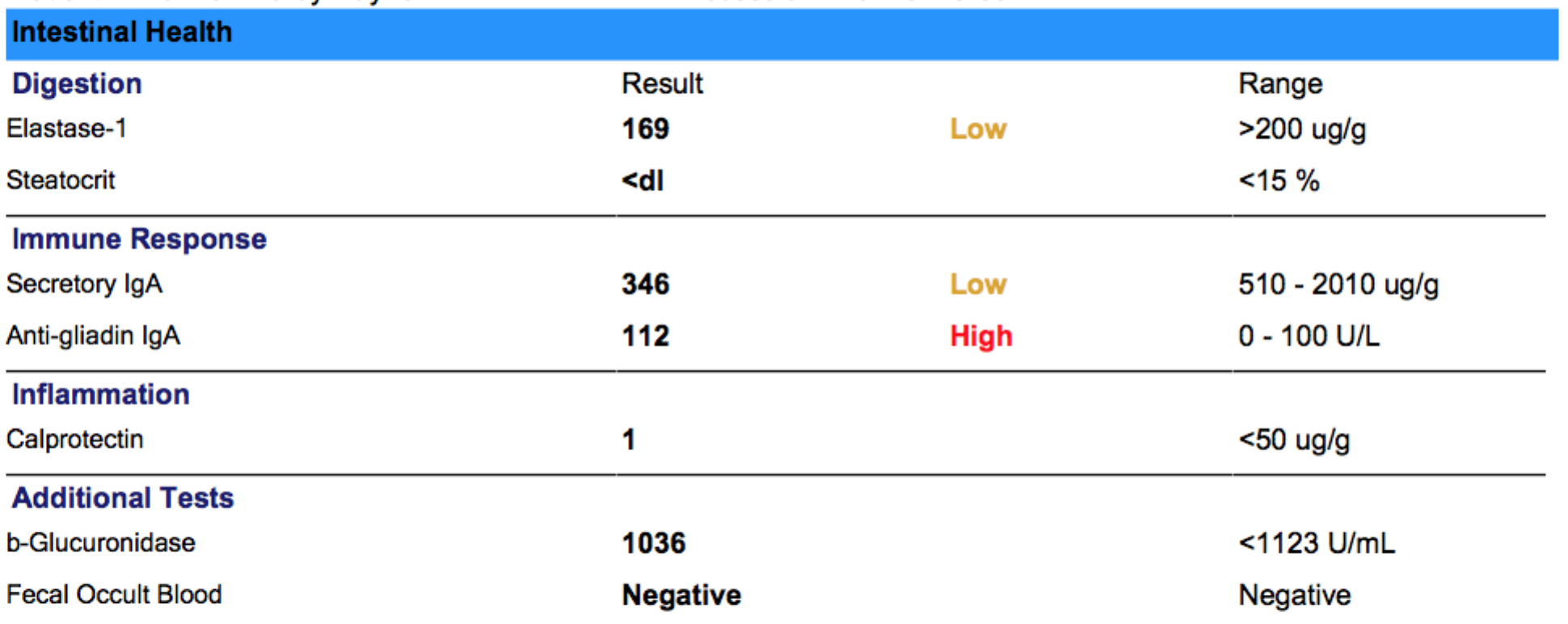
Would antifungals alone heal this patient?
It makes sense that a course of antifungals probably won’t address all these issues.
The antifungals can really help the process of rejuvenating gut health in this person, but they can’t magically solve every problem.
Instead, a 90-day “Digestive Reset and Gut-Rebuilding” program would likely prove more effective, delivered in this sequence:
- Improve diet and lifestyle factors
- Remove bad bugs using medications* and/or herbs
- Restore ability to digest
- Restore immune function
* As long as doctor will cooperate.
Summing up
Assuming you only have a Candida (or other fungal overgrowth), you can now adapt your eating and lifestyle habits accordingly.
- I urge you not to cut out all your carbs as this will potentially starve your own cells of the nutrients they need to thrive. In the process, this could make you feel worse.
- Certainly, it’s wise to cut out alcohol, processed foods and and junk food, but completely cutting out fruit and vegetables isn’t necessary in my experience.
- The only time I have clients cut carbs right down is if symptoms definitely worsen when carbs are eaten.
- You might also want to cut out coffee and black tea while you fight the Candida.
- Add some apple cider vinegar with meals, cook in coconut coconut and olive oil and use liberally in dressings.
- Eat plenty of garlic, and liberally use herbs and spices, to taste, and/or as long as you can tolerate them.
- Cook from scratch, relax, chew your food properly and don’t worry about it too much!
- Once you’ve sensibly altered your diet, consider using the antifungal medications discussed above under the supervision of a sympathetic doctor who understands the situation.
- Consider the antifungal parade, and consider using biofilm-disrupting products if your Candida overgrowth is especially stubborn.
How to get started
In our humble opinion, the key to succeeding with these treatment plans is to make sure you know what you’re up against.
…. and yes, that means getting properly tested up front and before you take meds or herbs.
Imagine you have these symptoms: heartburn/reflux, bloating, diarrhea, fatigue, skin problems.
Then, let’s say you’ve read an article online saying that Candida can cause these symptoms.
You eagerly gather all the items together for a Candida treatment plan, only to find that you feel no better after 3 months and a lot of expenditure.
Why could this be?
It’s simple: the symptoms could be the result of H. pylori on its own, parasites, SIBO, or a whole combination of these things.
Or, the symptoms could be the result of food intolerance, or even exposure to environmental toxins.
If you don’t have a thorough understanding of what is causing your symptoms, you can go off in completely the wrong direction.
Treating Candida may be essential for you to get well, but it may only be the 3rd or 4th step you need to take if there are other things going on.
This reminds me of my illness back in 2007-8, where I had some of symptoms just listed (heartburn, reflux, bloating, loose stools, fatigue, mood issues, etc.)
For me, the main cause was H. pylori, but there were secondary issues that needed to be dealt with, too, namely Blastocystis hominis and Aspergillus (a parasite and mold, respectively).
Had I not tested myself properly, I would not have known what to do, and which treatment sequences was best.
Sometimes you can treat the right thing at the wrong time.
So I’d urge you – implore you – to get properly tested if you’re sick of feeling sick.
The best starting point when digestive symptoms are involved is the comprehensive stool test.
It’s helped more than 3,000 of our clients over the last 12 years and I am certain it can help you, too.
Click here to read about a stool test, and perhaps order one.
In the final article of the Candida series, I’m going to share with you which specific products we use to help people who have a Candida overgrowth.
Watch this space!
Best,
Dave.
Disclaimers
The information contained herein is for educational and informational purposes only and should NOT be used as a substitute for the advice of a health care provider.
These statements have not been evaluated by the FDA. None of the products offered herein are intended to diagnose, treat, cure or prevent any disease. If you are pregnant nursing, taking medication, or have a medical condition, consult your physician before using any of the products offered herein.
Medical disclaimer: Any health information provided on this website should first be vetted by your own physician. Do not attempt to change your diet or any other activity related to your health based on information from this site unless you have first cleared it with your own medical doctor.
Results disclaimer: Any results, testimonials and comments published on this site are in no way a suggestion or guarantee of results. Your level of success in getting results similar to any success story on this site depends on several factors: your biochemical individuality, diet, background, motivation, commitment, and actions. Clearly, results vary from person to person.
2018 © Copyright by Health For The People Ltd. All Rights Reserved. | Dave Hompes | Google + | Sitemap | Terms | Privacy | Cookie Policy | Web Design Company