How Bea overcame H. pylori, digestive problems, low energy and knee pain
Bea contacted us having seen significant improvements in her daughter’s health while under our care.
A wellness enthusiast, Bea couldn’t work out why she hadn’t been feeling herself despite following a sensible and healthy lifestyle.
In her sixties, Bea had been struggling with a painful, arthritic knee for some time.
Recently, her digestion had been grumbling, her bowel movements were inconsistent, and her energy levels had dropped quite markedly.
Interestingly, Bea’s diet was very good. She was already eating a mainly organic, gluten and milk-free diet with hardly any processed food. She didn’t consume alcohol or smoke.
She sensed something wasn’t quite right and wanted to run lab testing to uncover what was going on.
Stool Test
Bea’s stool test result revealed several interesting findings.
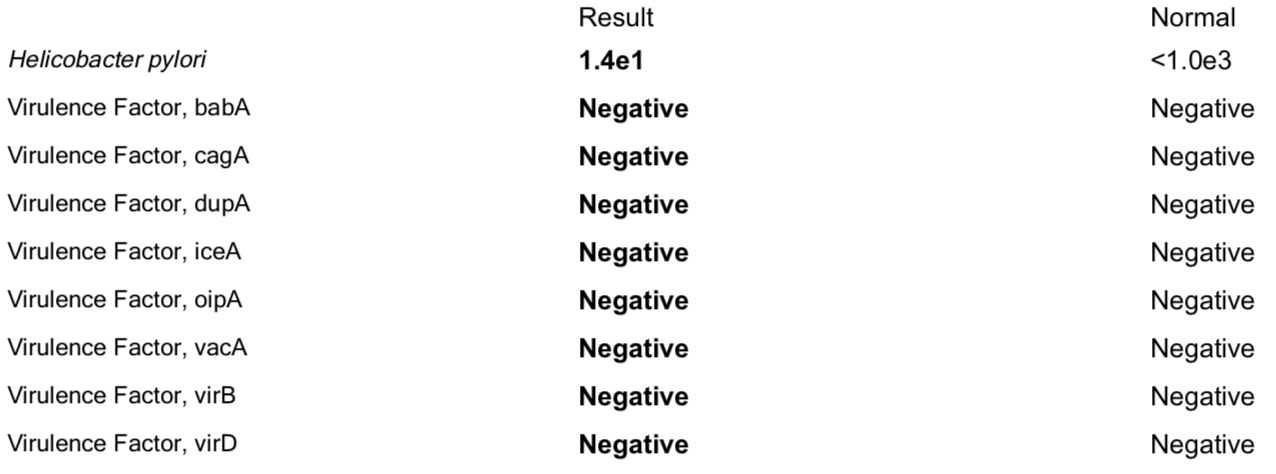
First, as you can see below, a small quantity of H. pylori was detected. Even in small amounts, H. pylori can contribute to a wide range of symptoms.
It is not always about the quantity of H. pylori in the digestive tract, but about the person’s reaction to those bacteria.
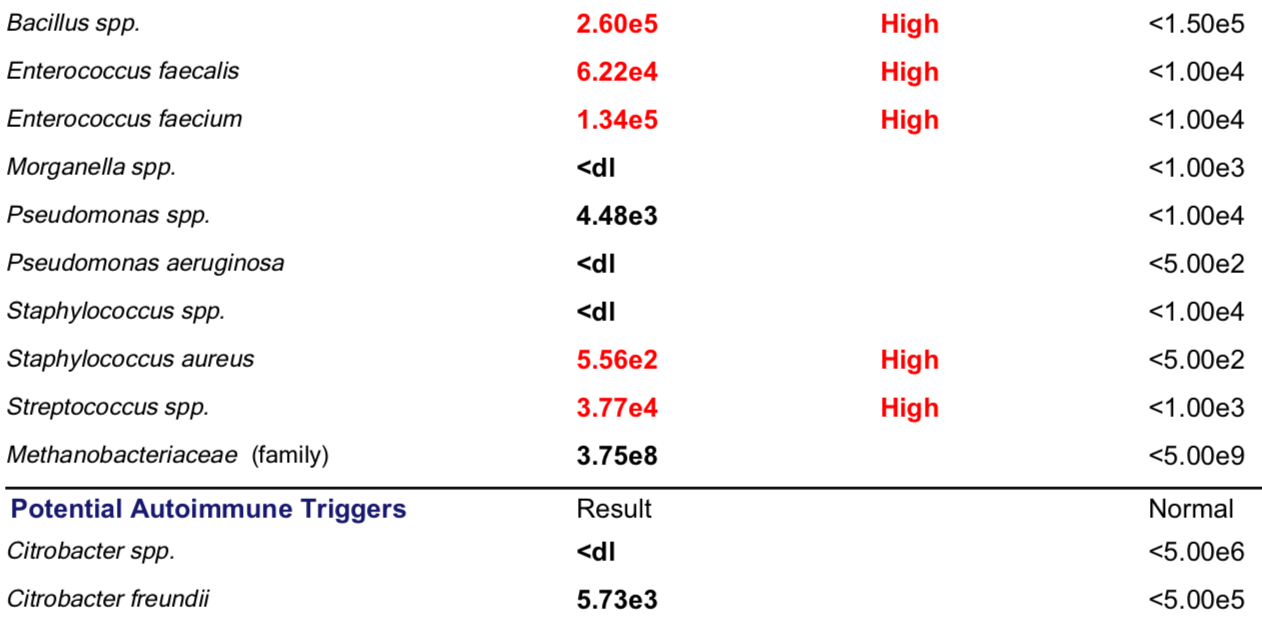
Next on the stool test, we can see that a number of intestinal bacteria were quite high (i.e. all the markers in red).
These bacteria are “normal” in the sense that scientists believe they are present in everyone’s digestive system.
In optimum quantities, they support health, but Bea had high levels in three specific bacteria that can cause problems when they overgrow––Bacteroides, Enterococcus, and Clostridia.

Next, we move onto some of the bacteria that should NOT be present at all in high quantities.
We might call these “bad” bacteria because we know they can cause problems when their abundance is too high.
Finally in regard to the stool test, we also found that Bea had:
- A parasite called Dientameba fragilis
- Low digestive enzyme levels
- Low immune function in her digestive system
Blood Test
We also took Bea’s blood test and conducted a “functional” analysis on it.
In a functional blood chemistry analysis, we interpret the data with a keener eye than the medical system, trying to find clues for symptoms rather than diagnosing diseases.
Bea’s blood test looked generally good, which was testimony to her healthy lifestyle.
However, there were FOUR major findings that needed to be considered.
The first thing we noted that with our stricter analysis, Bea’s blood sugar levels and insulin were slightly too high.
This could affect her ability to shuttle nutrients into her cells, leaving her feeling tired.

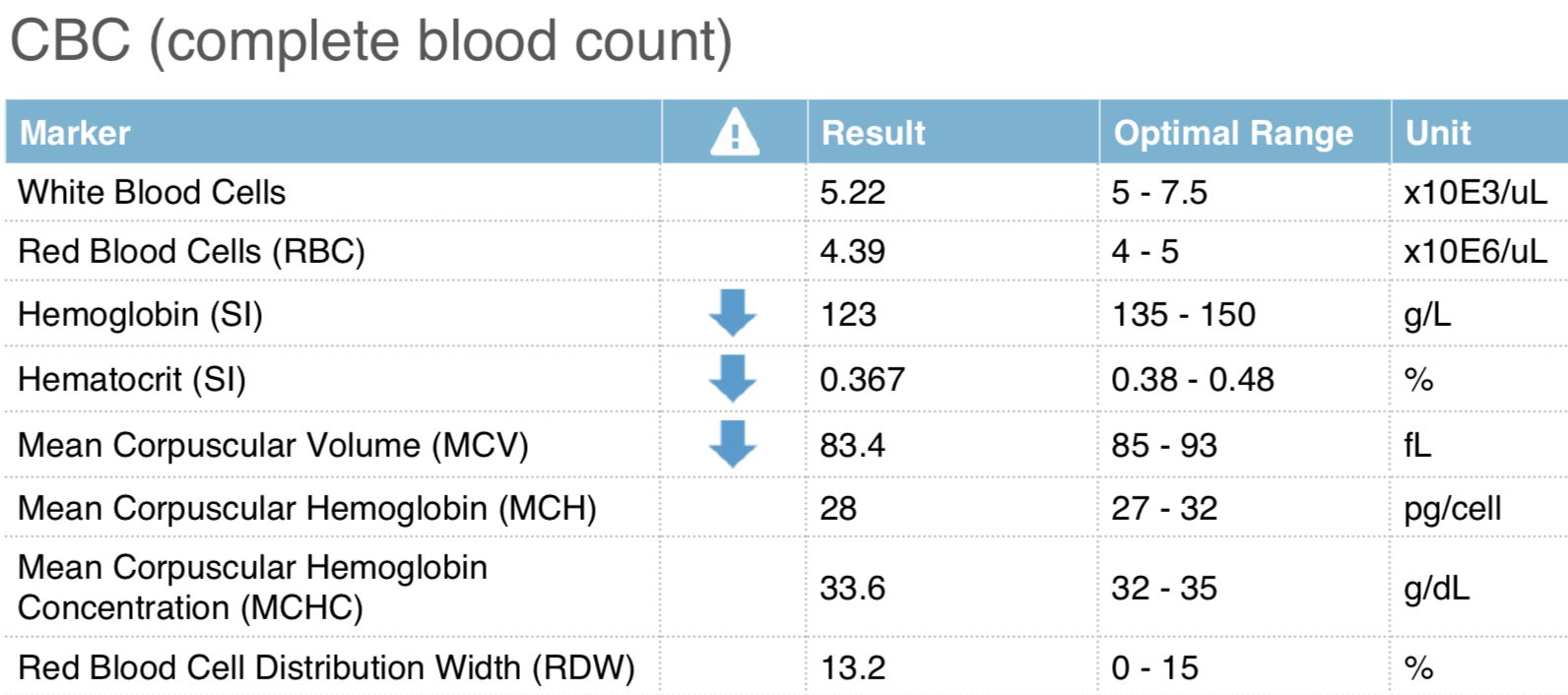
Next, we found that some of her red blood cells markers were too low, which can specifically indicate nutritional deficiencies in iron and vitamins B6, B12 and folate (B9).
Next, we also saw that Bea’s homocysteine level was a little high (we like it to be around 8 and hers was at almost 12).
When homocysteine rises, we know it is because of inefficient methylation in the cells. Again, this is often a sign of vitamins B6, B12 and folate insufficiency.
Inefficient methylation is a very significant cause of low energy in some people, and it is also associated with arthritis and digestive issues.

Finally, Bea’s vitamin D level was very low. Vitamin D helps with general energy levels and is very important for the immune system.

Action Steps
Nutrients
Armed with all this new knowledge about Bea’s digestive system and metabolism, we set to work.
First, we addressed the vitamins (largely because we received the blood test results much sooner than the stool test).
I recommended a highly absorbable B-vitamin supplement with generous amounts of B12 and folate, along with a specific B6 supplement.
We also added vitamin D and K drops for Bea to take under her tongue.
Finally, I recommended a supplement for blood sugar and insulin support containing chromium, vanadium and herbs to help improve Bea’s insulin sensitivity.
Within a very short space of time, Bea began to feel better, with more energy and clarity.
Digestive Cleansing and Support
Next, I recommended protocols to improve Bea’s digestion.
We needed to rebalance her gut microbes, so I recommended two specific protocols: one to combat H. pylori and one to combat the other bacteria and parasite.
Again, within a relatively short space of time, Bea began to feel improvements in her digestive system.
Digestive imbalances and nutrient deficiencies are independent causes for arthritic pain. As we rebalanced Bea’s digestion and replenished her nutrients, I hoped her knee pain would improve.
Sure enough, over the course of the following months, she was also delighted to find that the knee pain melted away, too.
Are you fed up with unexplained and ongoing symptoms?
Nobody, including you and your family, needs to put up with digestive symptoms or other related problems such as low energy, skin problems, low moods, anxiety and so forth.
It just takes the right testing and a little bit of commitment to overcome the symptoms and feel well again.
Sometimes the solution is relatively easy, and other occasions, it may be trickier.
Bea’s case fell turned out to be relatively straightforward, but we could only pinpoint what was needed by running the right tests.
Unfortunately, many people limp on with ongoing symptoms without realising they have easy access to powerful testing and healing tools.
It’s not uncommon for some of our clients to have been suffering with symptoms for years or even decades (the longest is 70 years).
You’ve heard or seen me say this before: a home stool test is one of the tools that can help you.
It’s quick and easy to do––you don’t even need to visit a clinic.
A test kit is sent to your home, you complete a sample in privacy, and send it back to the lab for analysis.
The private labs really look at the stool sample with detail––way more detail than standard medical testing––and are able to find important information about your digestion that would otherwise be missed.
It is the breadth of information that so often makes the difference to people’s health outcome.
You have to know what you’re up against so you can target the treatment protocols with laser-focus and efficiency.
So, if you’re bored of having a bunch of unexplained symptoms and you just want some answers, here’s how we can help.
Most importantly, please realise that you don’t have to put up with feeling crappy.
The solutions are there for you!
All our best,
Dave & Jack
Disclaimers
The information contained herein is for educational and informational purposes only and should NOT be used as a substitute for the advice of a health care provider.
These statements have not been evaluated by the FDA. None of the products offered herein are intended to diagnose, treat, cure or prevent any disease. If you are pregnant nursing, taking medication, or have a medical condition, consult your physician before using any of the products offered herein.
Medical disclaimer: Any health information provided on this website should first be vetted by your own physician. Do not attempt to change your diet or any other activity related to your health based on information from this site unless you have first cleared it with your own medical doctor.
Results disclaimer: Any results, testimonials and comments published on this site are in no way a suggestion or guarantee of results. Your level of success in getting results similar to any success story on this site depends on several factors: your biochemical individuality, diet, background, motivation, commitment, and actions. Clearly, results vary from person to person.
2018 © Copyright by Health For The People Ltd. All Rights Reserved. | Dave Hompes | Google + | Sitemap | Terms | Privacy | Cookie Policy | Web Design Company